

The Power of African Humanism
African Leader Magazine - Issue 48 - June 2015 - by Duma Gqubule
After three decades at the pinnacle of corporate South Africa, Dr Reuel Khoza still believes in the spirit of ubuntu, writes Duma Gqubule.
More than five decades ago, while he was studying for his junior certificate (Grade 10) examinations, Reuel Khoza wrote an aptitude test that was meant to guide him in his selection of a career. As he sat with the young Khoza to explain the results, the apartheid-era inspector, who was a qualified psychologist, said: "I don't know what to say about these results. But I think you can do anything that you want to do."
Two years later, as he was preparing for his matric exams, he wrote the test again. The inspector's message was exactly the same. Over the next few decades, during a distinguished career that saw him rise from herdboy in rural Bushbuckridge, Mpumalanga, to scale the heights of corporate South Africa, Khoza proved that the inspector's inspiring assessment of his abilities was correct.
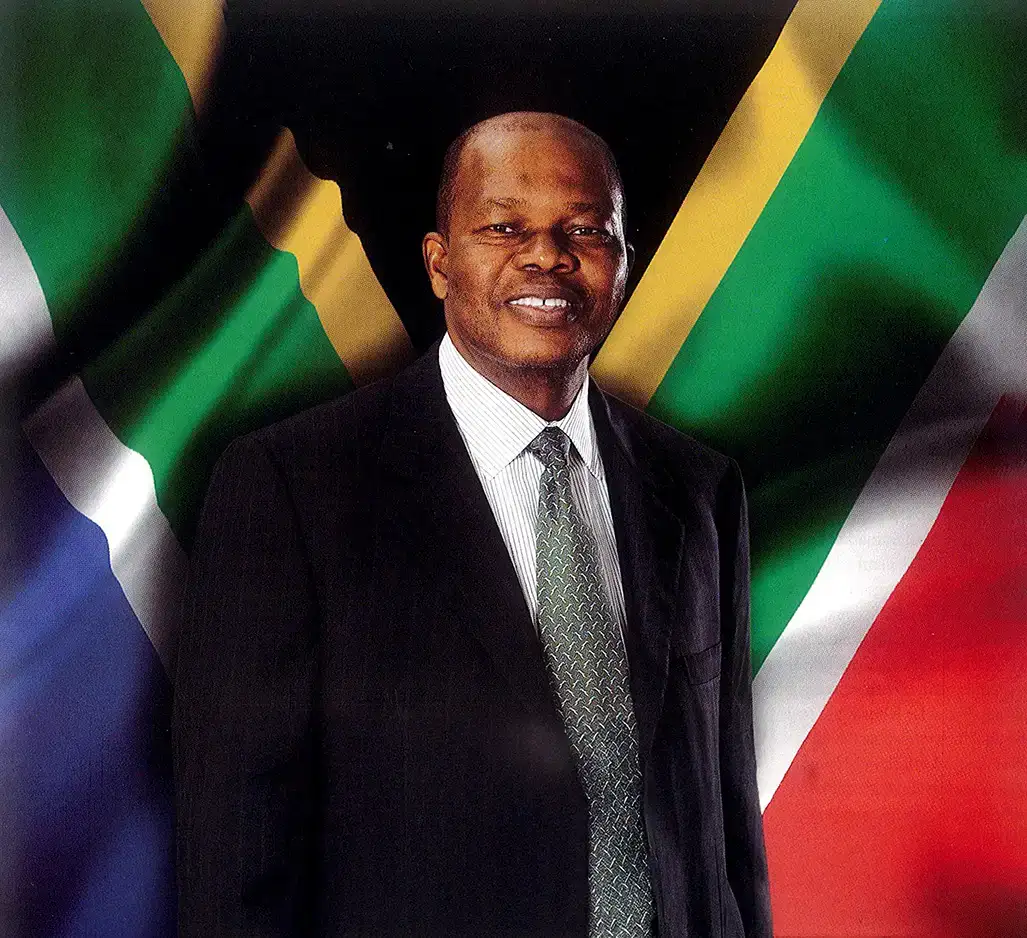
Almost everything he subsequently did was a success. The one exception was Shareworld, an audacious bid to build a Disney-like complex near Soweto, which eventually folded during the late 1980s. But there is another way of looking at the experience: a black person had succeeded, during the dark days of apartheid, to raise R19 million to build the complex, after his partner, Jonty Sandler, a white South African, had failed to mobilise the funds. The venture failed, probably because it was at least a decade too soon.
Over the next five decades, Khoza displayed his talents in a wide range of areas, as a student leader, academic, author, philosopher, philanthropist, orator, marketer, market research expert, management and leadership development guru, avocado farmer, entrepreneur, chairman and member of countless boards, and a leader of tertiary institutions.
As a well-known figure, many South Africans may think they know Dr Khoza, but he is full of revelations, such as the fact that he has an avocado farm in Mpumalanga, which was started in 2007 and is now the country's second-largest exporter of the fruit. "We export 2.2 million trays a year and employ up to 300 people during peak season."
Like many accomplished people, he has few regrets. "One of them is that I did not pursue my university passion for psychology to the levels of masters and doctoral degrees." But the initial training in psychology and the social sciences has served him well as an author of five books.
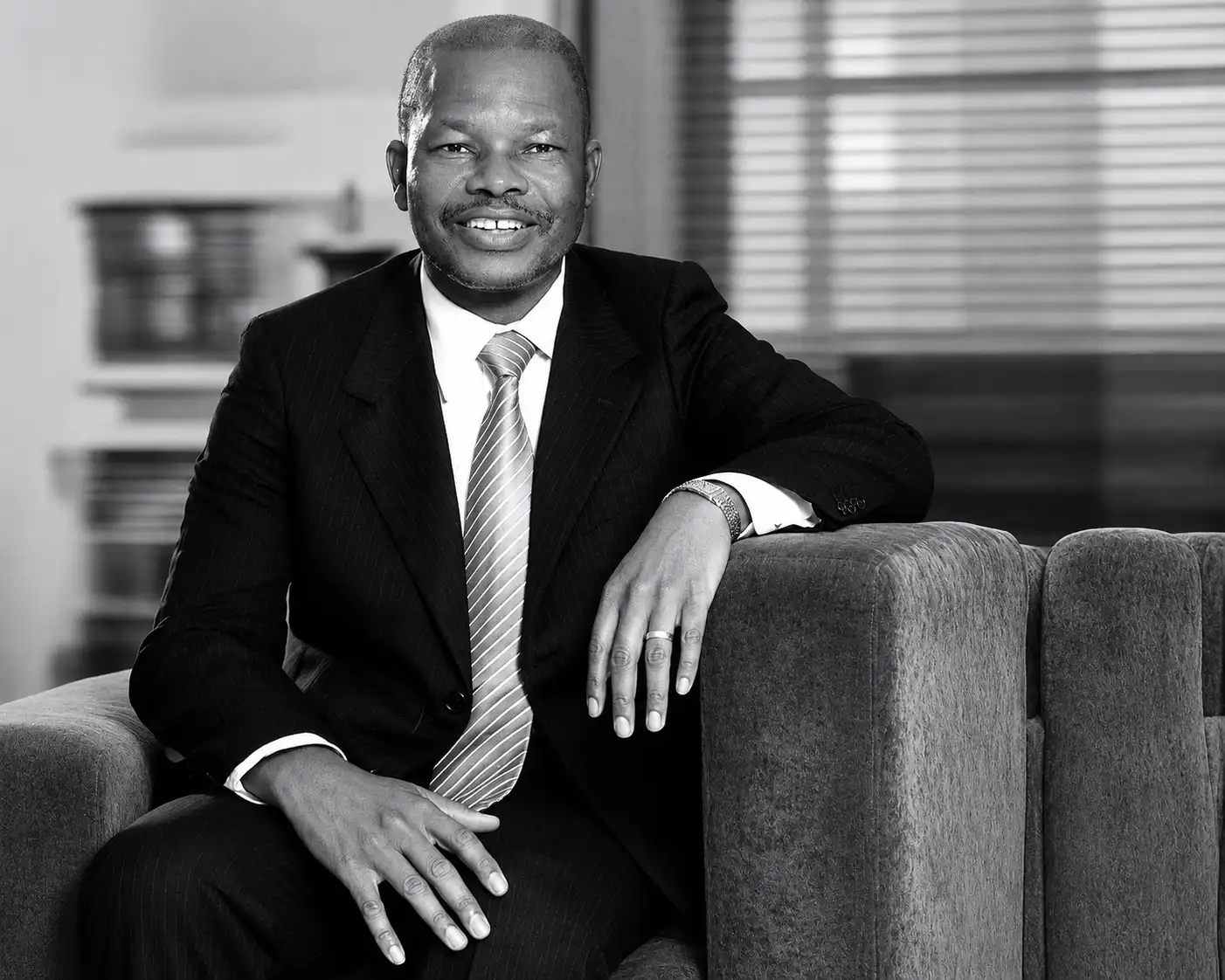
Attuned Leadership is a deeply philosophical book that explains how the ethic of ubuntu can transform business, statecraft and global leadership.
Let Africa Lead provides guidelines for 21st century businesses, drawing on the community consciousness of African humanism.
The Power of Governance shows how corporate governance principles should apply to state-owned enterprises for profitability and delivery, and Ubuntu Botho does the same.
The African In My Dream: A Corporate Participant-Observer's Odyssey 1983–2013 is a collection of essays and speeches he delivered over three decades.
For any keen student of economic development and black economic empowerment (BEE), two of his classic speeches more than a decade ago are a must-read.
Black Business at the Crossroads: Challenges to the Future was a speech he delivered to the National Federated Chamber of Commerce (NAFCOC) annual conference in 1987, and there he asked: "Is it sensible to speak of black business at the crossroads when, in fact, there is hardly any black business to speak of? Black business cannot today be at the crossroads, because there is hardly any black business to speak of. By whatever index we use to measure black business, the truth is that, on the national front, we are so insignificant as to be non-existent, and we should be under no illusion about that fact. The machinery of economic oppression has ground black business into oblivion. In fact, I would argue that economic oppression and dispossession of blacks has been pursued more singlemindedly and more efficiently than political domination."
Assessing the Effectiveness and Value of Black Economic Empowerment Initiatives to Date was a speech he delivered to the NAFCOC annual conference in 1997, four years after...
SOUTH AFRICA IS WIDELY RECOGNISED FOR ITS LIBERAL AND ENLIGHTENED CONSTITUTION, YET WE OBSERVE THE EMERGENCE OF A STRANGE BREED OF LEADERS WHO ARE DETERMINED TO UNDERMINE THE RULE OF LAW AND OVERRIDE THE CONSTITUTION.
...Sanlam announced the country's first BEE deal in May 1993. The transaction involved the sale of a 10% stake in Metropolitan Life to Methold, a consortium led by black business legend Ntatho Motlana.
He delivered the speech soon after the start of a currency crisis in East Asia in 2007 that eventually affected most emerging markets, and resulted in a collapse of share prices on the JSE and the end of the first wave of BEE transactions.
Khoza stated: "In time gone by, a lot of hopes, dreams and effort were invested in a delusion that, through some pseudo-scientific process, base metals like iron could be turned into gold. The process was called alchemy. It was obviously a sham and did not work. Today, black business has found a new alchemy, a new way of creating gold."
He added: "We believe that through some pseudo-economic process such as sophisticated financial engineering, we can turn blackness, in and off itself, into gold. Often we bring no more to the table than the pedigree of our blackness and expect this to do magic for us. We bring little by way of strategy, a plan, capital, expertise or skills to the deals we get involved in. History will tell us whether our brand of alchemy is more effective than those that went before us."
Reflecting on his thoughts about BEE 18 years later, in the context of a recent speech by President Jacob Zuma, who lamented the fact that black people still own only 3% of the shares on the JSE, Khoza states that currently, he cannot say much. "I would have to first do some research on the matter," he says.
Khoza was brought up in an extended family environment in Bushbuckridge. His grandfather was a lay preacher-turned-herbalist. The custom was for the grandfather to bring up the eldest grandchild. "Indolence was frowned upon. Children in the household had to wake up at dawn, herd the cattle and sheep, and draw water from the neighbouring fountain. The old man was industrious. He believed that there was virtue in work. You had to earn the right to rest."
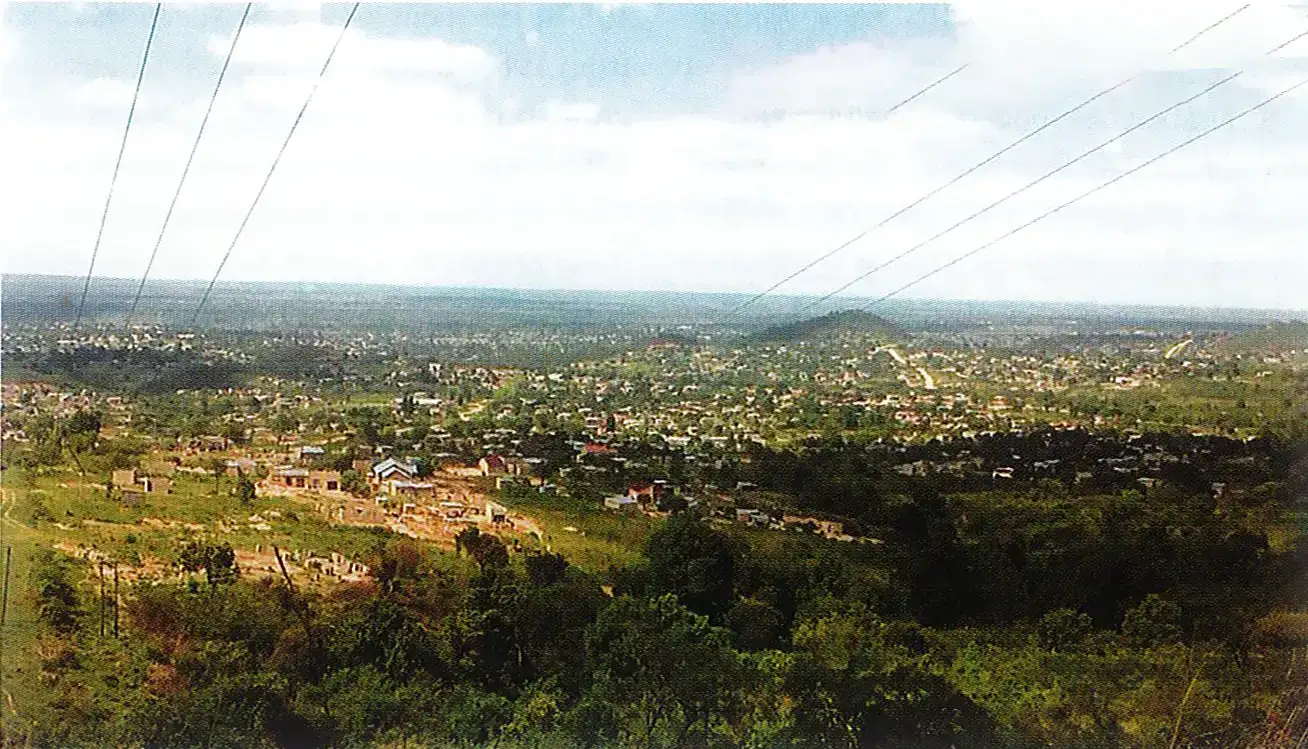
His father was a lay preacher and teacher. "He had a Pygmalion effect on his children, whereby the greater the expectation placed upon people, the better they perform. He never failed to set stretch goals and to reinforce achievement mainly through praise. From Standard 3 (Grade 5) I had to write letters to him in English, not Shangaan, and he would mark the letters."
His vacation jobs included working as a gardener at a mission station and sweeping streets at a game lodge. Throughout high school he was the top performer, outperforming about 200 other students. He recalls an inspiring principal who had two degrees, in Science and Divinity, which was virtually unheard of in rural Mpumalanga.
He went to the University of the North Turfloop (now the University of Limpopo) during the early 1970s. The politically volatile campus was a hotbed of black consciousness ideology. Peers included student leader Onkgopotse Tiro, who was assassinated in Botswana in 1974, and Cyril Ramaphosa, the current deputy-president of South Africa. Khoza was chairman of the Psychology and Choral Societies, both of which became politicised.
The Psychology Society discussed the impact of oppression on the black psyche, while the Choral Society started singing political songs. Later, the university employed him as a research officer and junior lecturer while he completed a two-year honours degree majoring in Psychology, but he was fired from the university at the end of 1974 due to his growing involvement in political activities.
Soon afterwards he joined Unilever, the multinational consumer goods company, as a marketing trainee, and rose to the position of brand manager. In 1978, he was one of nine South Africans who won a Shell scholarship to study in the United Kingdom. The group included former Black Management Forum (BMF) president Don Mkhwanazi. He completed a masters degree in Marketing at the University of Lancaster, and later returned to complete an Engineering (business) doctorate at Warwick University.
On his return to South Africa, he worked for Shell as a marketing communications manager responsible for market research, advertising, sales promotion and motorsport. In 1979, he was one of the founding directors of the BMF. In 1981, he started Coordinated Marketing, a marketing consultancy, which later broadened its scope to include management and business leadership development, sociopolitical analysis and strategy consulting. The consulting clients included Shell, Ford, Firestone, IBM, Eskom and South African Airways.
His influential speech on Tokenism in Corporate South Africa in 1983 got rave reviews, and that same year, Khoza was invited to serve on a Standard Bank advisory board, which was a platform for developing black board talent. Soon, Khoza was appointed to the boards of companies such as Stannic, Standard Bank Investment Corporation, Standard Bank Group, Munich Re, Norwich Life, Liberty Life Group and IBM, making him one of a handful of black board members during the mid-1980s. He spent almost two decades, from 1983 to 2002, on Standard Bank group boards. "Although I was by no means a token, I was a token presence who represented all black people on these boards."
It was during this period that the Shareworld debacle happened. "It had nine cinemas, many restaurants and an artificial ocean, like the Valley of the Waves at Sun City. But the problem was the high debt-to-equity ratio. We raised R19.4 million from Standard bank chairman Conrad Strauss. But the sum total of the security I provided was a house in Pimville, Soweto, that was worth R130 000. The media speculated that I would lose my board position. Instead, Strauss asked me what I had learned from the experience. Later, he promoted me to the main board."
During the early 1990s, Khoza developed good relations with ANC leaders, including the late Walter Sisulu, when he persuaded the chief executive of Munich Re to lease a building in Sauer Street, Johannesburg, to the organisation. During this period, he also became a director of Vodacom and played a big role in the development of Gold Reef City, the gambling and entertainment resort in the south of Johannesburg.
In 1997, he was appointed chairman of Eskom. The cabinet had been divided between those who wanted Khoza and others who preferred Ramaphosa. "Cyril loomed large and I loomed small. To be fair, they developed a list of 14 criteria to evaluate the two candidates. I won on nine of the criteria. It was a rigorous selection process. What helped me was the fact that I had been a consultant to Eskom for 10 years. It was a unique assignment, because I had been a permanent member of a structure that included the company's top 30 executives," he recalls.
There were four issues that he had to address: to accelerate transformation; to expand electrification; to reduce the debt-to-equity ratio; and to expand operations to the rest of the continent.
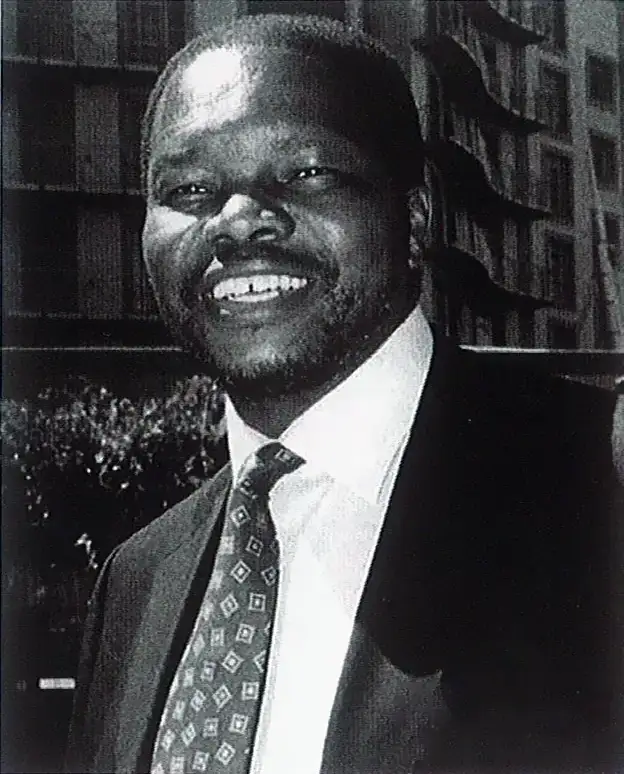
There were gains in transformation as procurement from black-owned companies increased to R10 billion in 2005, when he left the board, from R200 million in 1997. The percentage of black people in management increased to 58%, from 35% in 1997 and 9% in 1994. The percentage of women in management increased to 29% in 2005, from 13% in 1997 and 10% in 1994.
The other highlight of the period was when Khoza was part of a BMF delegation that visited the ANC-in-exile in Lusaka in 1987; the contingent included the organisation's former president, Don Mkhwanazi. The ANC representatives included former president the late Oliver Tambo, and National Executive Committee (NEC) members Thabo Mbeki, Joel Netshitenzhe, Jacob Zuma and Pallo Jordan. "It was a robust meeting. Pallo Jordan said: 'We think you guys are traitors. You cannot ride two horses.' At the end of the meeting, I summed up the proceedings. When I finished, Oliver Tambo came up to embrace me."
During his term, the company was connecting more than 200 000 houses a year to the grid. It is difficult to believe now, but in 2001, Eskom won the Financial Times Global Power Company of the Year award. The award was presented in recognition of Eskom's success in "providing the world's lowest-cost electricity, while at the same time making superior technological innovations, increasing transmission system reliability, and developing economical, efficient and safe methods for combustion of low-grade coal". The utility's financial situation...
KHOZA STILL HAS A FEW GOALS TO ACHIEVE BEFORE HE TURNS 70 IN FOUR YEARS' TIME. HE WILL CONTINUE WITH PHILANTHROPIC ACTIVITIES IN MPUMALANGA, WHERE HE HAS BUILT CHURCHES AND SCHOOLS, AND PROVIDED BURSARIES.
...improved rapidly and the company was virtually debt-free by 2005. By the end of 2004, Eskom was operating in more than 30 countries, compared with seven when he started. The company told the government that the country would experience problems by 2006 if it failed to invest in new generation capacity. "The shareholder did not listen to our advice to build more power stations, and the result was the rolling blackouts of 2008. Here was an instance where our only shareholder, the state, did not heed the interests of the nation," Khoza says.
On the currently chaotic and embarrassing situation within many state-owned companies (SOCs), he says the biggest problem is the ruling ANC's deployment policy. "This policy is one of the worst curses to economic development. It elevates mediocrity," he says.
In 2006, Khoza was appointed chairman of Nedbank. This later resulted in an invitation to serve on the board of Old Mutual, which owns 54% of Nedbank's shares. The bank was recovering from a disastrous year in 2003, when it reported a loss and was forced into a R5 billion rights issue. In December 2003, the company had a market capitalisation of just R17 billion. By the time Khoza signed off on his last financials as chairman for the year to December 2014, the company had a market capitalisation of R124.3 billion. Nedbank's 2005 BEE transaction had created net value of R5.5 billion, equivalent to 4.4% of the company's market capitalisation, as the group's share price more than doubled.
In the chairman's review of Nedbank's 2011 annual report, Khoza launched a blistering attack on the ANC government, which was met with an equally scathing response from the party. Khoza said: "South Africa is widely recognised for its liberal and enlightened constitution, yet we observe the emergence of a strange breed of leaders who are determined to undermine the rule of law and override the constitution. Our political leadership's moral quotient is degenerating, and we are fast losing the checks and balances that are necessary to prevent a recurrence of the past. This is not the accountable democracy for which generations suffered and fought."
ANC secretary-general Gwede Mantashe then made a bizarre response: "Reuel Khoza is the chairperson of Nedbank. He was given a task by Old Mutual a few years ago to find a buyer for it. He has not found that buyer. Reuel Khoza must sell Nedbank and not venture into something he doesn't know. Wrong platform... he has failed to sell Nedbank." Since Nedbank can't be sold to another domestic bank, Mantashe was effectively calling for foreign shareholders to take control of the second of the country's four major banks. In 2005, Barclays bought 55% of ABSA. Khoza believes his comments have been vindicated. "We are on a downward spiral," he says.
Khoza also served for a decade, between 2001 and 2011, as chairman of the New Partnership for Africa's Development (NEPAD) Business Group, which later became the NEPAD Business Foundation (NBF). NEPAD was an ambitious socio-economic development plan for the continent which was adopted by African leaders, led by former presidents Thabo Mbeki of South South Africa and Olusegun Obasanjo of Nigeria, in Lusaka in July 2001. When put to Khoza that NEPAD has collapsed, he replies: "It is limping. It has not collapsed. There is a lack of a champion, an intellectual driving force, following the disappearance of Thabo Mbeki. The nightmare of xenophobia that we are witnessing can also be attributed to the lack of effective, visionary leadership. The original NEPAD message that we belong together would have gained momentum," he says.
Since 2001, Khoza has also led AKA Capital Holdings, a private equity and investment holding company, together with colleagues Sam Nematswerani and Gary Morolo. The company has shares in Tsogo Sun, Datacentrix, Nampak, Sasol Oil, Ceramic Industries and Corobrik. The company has exited investments in Murray & Roberts, Nedbank and Protea Hotels. Khoza will not tell me what the group's net asset value is. "That is why we are private. But I can tell you that we are now debt-free," he says.
After three decades at the pinnacle of corporate South Africa, Khoza still has a few goals to achieve before he turns 70 in four years' time. He will continue with philanthropic activities in Mpumalanga, where he has built churches and schools, and provided bursaries. "I would also like to do something pan-African. Not a bank, but something in developmental financial services," he says.
He would also like to write another book. "I am worried about the future of capitalism. It is inhuman," he says. In one of his recent speeches, Humanising Capital, he says capitalism has degenerated into unfree enterprise on a narrow base that serves the interests of the rich particularly those with close links to government. He explains that there has been a corruption of good governance through selfishness and unrestrained greed, combined with government by elites in the interests of elites. "It is plutocracy, rule by the wealthy, that is destroying faith in capitalism," he says.
However, the challenge is not to abolish capitalism, but to humanise it. He says the current crisis of capitalism, along with the worldwide protests flowing from it, will force a re-evaluation of the way corporates and governments behave.
"I believe that African humanism, or the spirit of ubuntu, has the essential formula to change and improve capitalism, and that we in South Africa can lead the way, not just locally, but globally. Ubuntu emphasises our common humanity, and on this basis it prompts us to act ethically towards others."